
Pakistan's Information Minister claims nearly 800 Afghan Taliban terrorists have been killed in Operation Ghazab lil-Haq, launched in response to cross-border firing.

'We need to give Pakistan something serious to think about on its eastern front -- that is the only way to actually help Afghanistan right now.'

China has urged Pakistan and Afghanistan to engage in direct talks to resolve their ongoing conflict, offering to mediate and calling for a ceasefire.

Officials from Pakistan, Afghanistan, and China are meeting in Urumqi to discuss regional security concerns and potential confidence-building measures.

'TTP has vowed to take revenge for the attacks that Pakistan is carrying out against Afghanistan.' 'To diminish this threat, Pakistan is hitting Afghanistan hard.'
China's week-long mediation between Pakistan and Afghanistan concludes without a formal agreement, though Beijing claims progress in exploring solutions to resolve their differences.
China is mediating talks between Pakistan and Afghanistan to address their ongoing military conflict, following Pakistan's operation against terrorist hideouts in Afghanistan and UN reports questioning Pakistan's evidence of militant presence in Afghanistan.
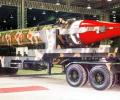
The US intelligence assessment highlights Pakistan's near-certain procurement of weapons of mass destruction-applicable goods from foreign suppliers, primarily through Chinese support.
The announcement on expansion of CPEC was made following a meeting among Chinese Foreign Minister Wang Yi, his Pakistani counterpart Ishaq Dar and Afghanistan's Acting Foreign Minister Amir Khan Muttaqi in Beijing, according to a Pakistani readout.

'The worst case scenario for Pakistan is a full-scale Taliban takeover of Afghanistan.' 'Pakistani militants would be inspired and emboldened and seek to replicate the Taliban's successes in Pakistan.'
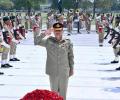
Sections in the US State Department and Pentagon have always felt more comfortable dealing with all powerful Pakistani generals instead of elected civilians, points out Rana Banerji, who headed the Pakistan desk at RA&W.

The visit comes two days after Pakistan officials shared with the Chinese embassy the preliminary findings of their investigation into the attack.
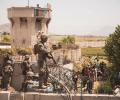
The US military efforts in Afghanistan were akin to filling a bucket that had gaping holes, asserts Colonel Anil A Athale (retd).
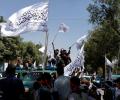
The Taliban government in Afghanistan is not going anywhere. That being the case, why is the hesitation to establish formal diplomatic relations with the Taliban? asks Lieutenant General Prakash Katoch (Retd).

The recent incident has eroded trust and Chinese social media reflects growing anxiety, with calls for stricter security measures to protect Chinese lives.
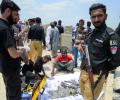
'This strike has certainly enhanced your image.' 'Otherwise, people would have called you a damp squib, capable of doing nothing except talking big.'

The Taliban is showing its strong discontent as the high hopes given to it by the Pakistani military have been dashed, observes Ambassador M K Bhadrakumar.
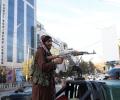
Delhi has come to accept the Taliban takeover in Kabul as a reality and seems increasingly unsure of its dogmatic view of the Taliban as a mere proxy of the Pakistani military and security establishment, observes Ambassador M K Bhadrakumar.
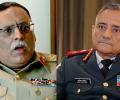
In the wake of the recent hostilities, both sides have moved from weapons to words, with India dispatching several delegations to visit more than 30 capitals across the world. A similar effort by Pakistan is set to start on Jun 2.

Top military officials from India and Pakistan highlighted their views at the Shangri-La Dialogue in Singapore, billed as Asia's premier defence forum, amid heightened tensions between the two sides following last month's military confrontation.
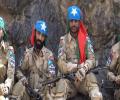
The Balochistan Liberation Army (BLA) has undergone a significant transformation, evolving from hit-and-run attacks to carrying out sophisticated operations with tactical precision. The group's tactics and targets have become increasingly audacious, targeting security forces, Chinese nationals, and innocent civilians. Experts attribute the BLA's evolution to various factors, including the leadership of Bashir Zeb, the group's growing intelligence network, and its exploitation of the grievances of the Baloch people. The BLA's actions are a cause for concern, as the group's sophisticated attacks pose a major challenge to security forces.
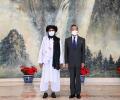
China may accord recognition to the new government in Kabul at an early opportunity, predicts Ambassador M K Bhadrakumar
'If there is a military standoff eyeball to eyeball on the western border, the Chinese could create problems by making movements in the north, in our northeast, which could involve us tying down some forces there so that could stretch our military actions.'

'It will remain hostile to Indian interests owing to its close proximity to China.'
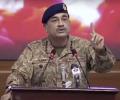
Asim Munir and his brand of short-sighted army officers give no inkling of paying heed, changing course or learning lessons from the past, observes Rana Banerji, who headed the Pakistan desk at RA&W.

'The struggle of insurgents and pro-independence political activists is fuelled by a deep conviction that not only is a free Balochistan possible, but they also believe that Pakistan will inevitably break apart, leading to Balochistan's independence.'
'We need to be very vigilant as we are passing through some fraught times.'

'Pakistan's only concern has been while they were on the FATF watch list was to distance their State institutions and organs from any direct connection with the actual execution of militancy inside Kashmir.'

Terrorism and insurgency in J&K had subsided when India demolished East Pakistan -- for the simple reason that Pakistan understands power. We need to follow Chanakya's dictum of Saam, Daam, Dand, Bhed for strategising against Pakistan, asserts Lieutenant General Prakash Katoch (Retd). The ground truth is that unless we are prepared to acknowledge our shortcomings, including massive intelligence failures, punish those responsible and take corrective actions, we will continue in the same vein, asserts Lieutenant General Prakash Katoch (Retd).

If New Delhi finds itself out in the cold in Afghanistan, both the Congress-led UPA and BJP-led NDA have only themselves to blame. Each has been in power for a full decade from 2001, without reaching out to the Taliban, points out Ajai Shukla.
'Every decision India makes along the LoC, it must also consider implications along the LAC.'

If the Taliban have proved one thing over these two decades, it is that they are way smarter than their big brother, observes Shekhar Gupta.
'Even during the worst days during the 1990s, India was dealing with the Taliban.'

'We can't be outliers. We can't be bystanders. We have to be players.' 'The Taliban also need India to balance the winners in this game.'
The decision was taken during a meeting between Chinese Foreign Minister Wang Yi and his Pakistan counterpart Shah Mahmood Qureshi in the southwestern the Chinese city of Chengdu on Saturday.
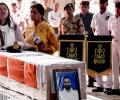
'If Pakistan's army wants to escalate violence in Kashmir, they have an unlimited supply of jihadis they can train and send. That's not an issue for them.'

'It is a testing time for our foreign policy which may involve a certain element of taking risks, assessing costs, and expecting failures,' asserts Commodore Venugopal Menon (retd).

But why should India be talking to the Taliban in the first place? There is no love lost there. India will never forget or forgive the humiliation to which the Taliban subjected it in the IC-814 hijack, notes Shekhar Gupta.

The world's attention is on the new Taliban and the imminent announcement of an inclusive government in Kabul, observes Ambassador M K Bhadrakumar

India needs to shed its policy of lethargy and inhibitions to engage the Taliban with an intent to maintain its influence in Afghanistan. This would not just put a spanner in Pakistani designs, but also incentivise the Taliban not to be the puppets of GHQ, Rawalpindi, asserts Colonel Nikhil Apte (retd), who served on the Af-Pak desk at the Military Operations Directorate.
